
Water Heater Flushing Service
Draining sediment from the tank bottom restores efficiency, quiets rumbling and protects the burner or lower element.
Add years to your heater and avoid surprise breakdowns. Book water heater maintenance service in Revere, MA, with flushing, anode checks and safety tests in one visit.
Call (781) 829-5444 to schedule maintenance.
A water heater works every day, often for 10 years or more, and most people never look at it until it fails. A yearly tune-up catches small problems early, keeps efficiency up and protects the tank from the inside.
Book a maintenance visit if:
Preventive care is a core part of the water heater services Revere homeowners rely on, and it is the least expensive way to avoid a costly repair.
Each maintenance visit is tailored to your heater type. These are the services that keep heaters healthy.
Draining sediment from the tank bottom restores efficiency, quiets rumbling and protects the burner or lower element.
The anode rod draws corrosion away from the tank. A fresh rod can add years to your heater's life.
Descaling the heat exchanger, cleaning the inlet filter and checking combustion keep tankless units at full output.
The T&P relief valve is tested so it can protect the tank if pressure or temperature climbs too high.
Gas units get a burner cleaning, flame check and draft test to confirm safe exhaust.
A full inspection of connections, valves and tank condition, with notes on anything to watch.
Use this schedule as a guide. Your technician may suggest a different interval based on your heater's age and condition.
| Task | Gas tank | Electric tank | Tankless |
|---|---|---|---|
| Flush sediment | Every year | Every year | Not applicable |
| Descale heat exchanger | Not applicable | Not applicable | Every year |
| Inspect anode rod | Every 2 to 3 years | Every 2 to 3 years | Not applicable |
| Test T&P relief valve | Every year | Every year | Every year |
| Clean inlet filter | Not applicable | Not applicable | Every year |
| Check burner, flame and venting | Every year | Not applicable | Every year (gas units) |
| Test elements and thermostats | Not applicable | Every year | Not applicable |
A tune-up is quick, but the payoff lasts all year. Here is what comes with every visit.
Most maintenance visits take about an hour. Here is the routine.
The technician checks the heater, connections, valves and venting.
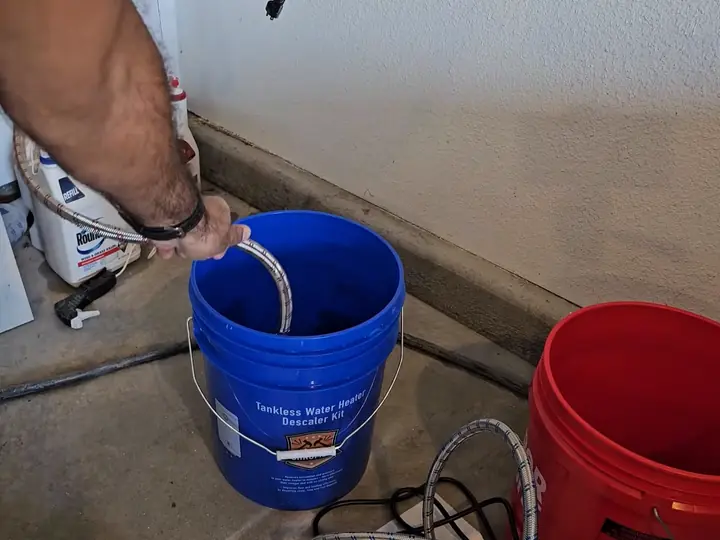
Tanks are drained of sediment. Tankless units are descaled with a pump and cleaning solution.
Safety valves, thermostats and gas or electric parts are tested and adjusted.
Due for a tune-up? Call (781) 829-5444 to get on the schedule.
Maintenance done right means real testing, not a quick glance. Here is what sets our maintenance visits apart.
Maintenance is done by licensed plumbers who can spot problems an untrained eye would miss.
Descaling pumps, flush kits and test meters come to every visit.
If a part needs replacing, you get the price upfront and the choice is yours.
An hour of maintenance can add years to your heater and help prevent a surprise cold shower. Book your visit today.
(781) 829-5444Here is what happens during the most important maintenance tasks, and why they matter in Revere.
Revere's MWRA water is soft, so tanks here build up less hard mineral scale than in many towns. Even so, fine sand, rust flakes and other sediment still settle at the bottom of the tank over time. On a gas heater, that layer sits between the flame and the water, wasting energy and causing popping sounds. On an electric heater, it can bury and burn out the lower element. A yearly flush clears it out.
The anode rod is a metal rod, usually magnesium or aluminum, that hangs inside the tank. It corrodes on purpose so the steel tank does not. Once the rod is used up, the tank starts to rust from the inside. Checking the rod every two to three years, and replacing it when it is worn, is one of the best ways to extend a tank's life.
If your hot water smells like rotten eggs, the anode material may be reacting with bacteria in the tank. Switching to a different anode type often solves it.
If your unit shows a scale or overheat code between visits, see tankless water heater repair.
Some homeowners flush their own tanks, and that is fine if you are comfortable with it. Be careful: the water is hot, old drain valves can break or leak, and gas or electric parts should be left to a professional. A maintenance visit also includes testing that most people cannot do at home, like checking gas pressure, element resistance and venting draft.
Homes near the water in Beachmont, Point of Pines and along Revere Beach benefit most from yearly checks, because salt air speeds up corrosion on fittings, vent parts and burner components. In Oak Island, damp basements make anode and tank inspections especially worthwhile.
Landlords with buildings around Shirley Avenue and Revere Center often schedule maintenance for several heaters at once to avoid tenant complaints. Single-family owners in West Revere, North Revere and Franklin Park book tune-ups to stretch the life of tanks that are approaching the 10-year mark.
Once a year is the standard recommendation for tank water heaters. Homes with heavy use may benefit from more frequent flushing.
It varies with water use and conditions. Many anode rods last 3 to 5 years. Checking every two to three years tells you when it is time.
Yes. Tankless units should be descaled and have their inlet filters cleaned about once a year. Gas units also need a combustion and venting check.
Most tune-ups take about an hour. An anode replacement or a heavily sedimented tank can take a bit longer.
Often, yes. Popping and rumbling usually come from sediment, and a thorough flush can quiet the heater. If noise continues, a repair may be needed.
Schedule water heater maintenance in Revere and get flushing, anode checks and safety testing from a licensed technician.
When a maintenance visit uncovers a failing part, repair service fixes it with your approval.
Learn more →If descaling does not clear an error code, tankless repair handles sensors, ignition and boards.
Learn more →When an inspection shows a corroded tank, replacement is the next step, and planning ahead avoids a flood.
Learn more →